

4.8 Ratings on Google
Quality work for a fair price
New Construction Boiler Heating in Woodland Park, CO
Quality Service without unnecessary upselling.
We respect your decisions by giving you clear options.
Local Experience serving Teller & Park County mountain homes
Boiler heating is one of the best fits for a new home in Woodland Park. Hydronic systems deliver steady, quiet warmth that holds up through long mountain winters and cold nights at roughly 8,500 feet. Woodland Plumbing, Heating & Air Conditioning designs and installs new-construction boiler heating systems throughout Teller and Park Counties. Boilers, in-floor radiant heat, and expansion tank compliance are among our strongest areas of work.
Planning a boiler system during construction gives you the most options at the lowest cost. Tubing, piping, and equipment space are far easier to lay out before concrete is poured, and walls close up. We walk you through each option so you can choose a system that fits your home and budget.
Our Services

Contact Us
- This site is protected by reCAPTCHA


What Your Neighbors Are Saying About Us

When you’re on time, honest, friendly and competent, and then fix it right the first time you’re worth five stars. We have hired them for both plumbing and heating and they still get the first call.
Malcolm M.
Mark the owner of the company does amazing work. They are thorough, timely, and do what they say they will. I’ve never dealt with a more professional plumbing/hvac company other than this one. They are simply the best!
Scott T.
Woodland Plumbing responded to my phone message quickly and was able to arrange a service call that day. The technician was very courteous and took care of my problem without an unnecessary or unexpected repairs. Their fee for this prompt service was extremely fair. No surprises.
Bill Q.
Boiler Systems for New Construction Homes
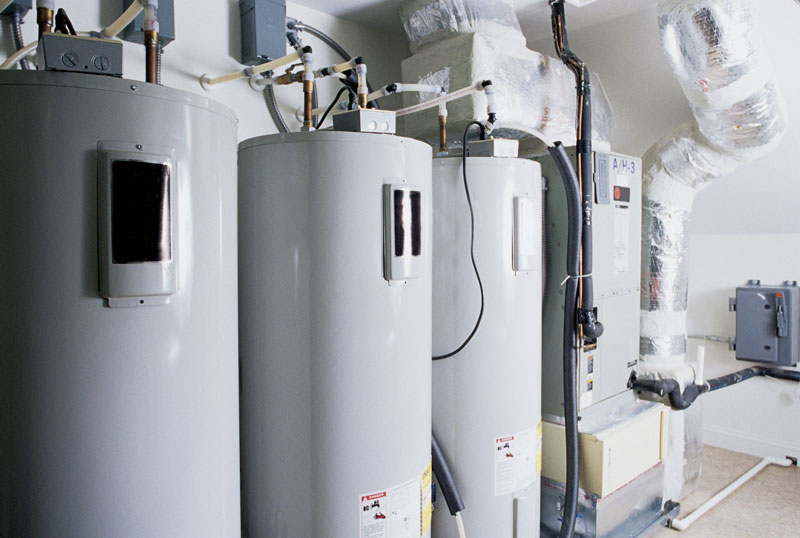
We install a range of boiler equipment set up for high-elevation homes.
- High-efficiency condensing boilers
- Propane and natural gas boilers
- Combination boilers
- Indirect water heaters
- Smart zone controls
- Glycol freeze protection
Every gas boiler we install in the area is adjusted for altitude. Thinner air changes how fuel burns, so equipment needs proper setup to run cleanly and efficiently. For homes that sit empty part of the year, glycol in the system helps protect piping from freezing during a power loss.
Sizing a New Construction Boiler With Accurate Heat Loss Calculations
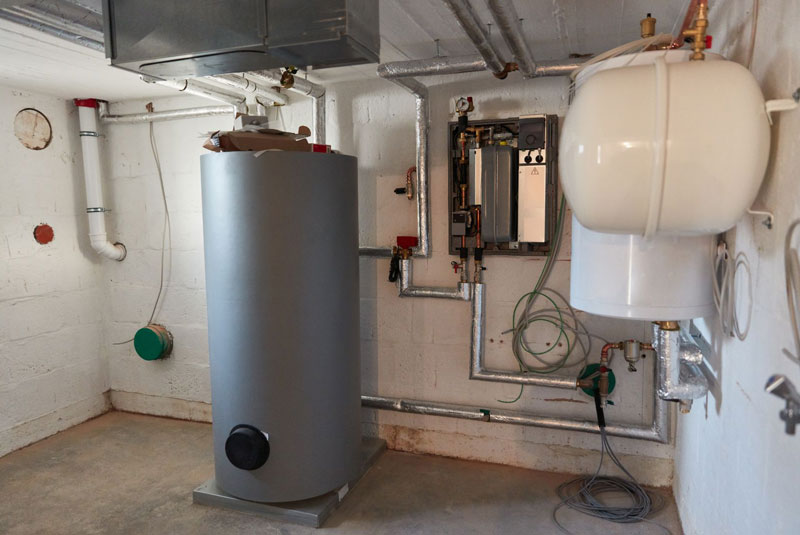
Every new-construction boiler installation starts with a room-by-room heat-loss calculation. We look at square footage, insulation values, window area, ceiling height, and building orientation. In Woodland Park, those numbers also need to reflect long heating seasons and cold snaps that can arrive in September and linger into May.
An oversized boiler cycles on and off too often, wasting fuel and shortening the equipment’s life. An undersized boiler runs constantly on the coldest nights and still leaves rooms cool. Accurate sizing avoids both problems from day one.
Altitude affects boiler output just as it affects furnaces. A boiler rated at sea level will not produce the same heat at 8,500 feet. We account for that loss when selecting equipment so the system keeps up when temperatures drop.
Radiant Floor, Baseboard, and Radiator Options for New Builds
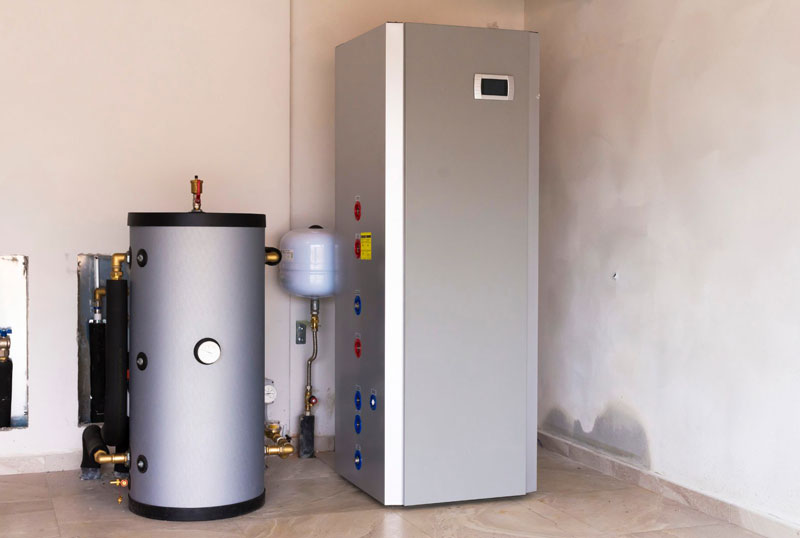
In-floor radiant heating is a popular choice in new mountain homes. Warm water moves through tubing in the slab or subfloor, heating the room from the ground up. It works especially well with tile, concrete, and stone floors, and it keeps heat at the living level rather than rising to the vaulted ceilings.
Hydronic baseboard is a practical option for bedrooms, upper floors, and additions. It installs easily along exterior walls and responds faster than a slab system. Panel radiators offer a clean look and work well in rooms where floor heat is not practical.
Many new homes use a mix of these methods. A basement slab might use radiant tubing while upper levels use baseboard or panel radiators. We design each zone with its own controls so you can heat the spaces you use without wasting energy on rooms you don’t.

New Construction Boiler Heating Built Around Your Project Schedule
Boiler work touches several stages of a build, so timing matters. Radiant tubing must go in before concrete pours or subfloor installation. Supply piping needs to be in place before insulation and drywall. We plan each step around your schedule, so our work never holds up the next trade.
Builders and general contractors can count on clear bids, steady communication, and crews who show up when promised. We coordinate with concrete crews, framers, electricians, and plumbers to keep mechanical spaces clear and the project moving.
For homeowners building custom homes, we explain the tradeoffs between radiant, baseboard, and radiator options in plain terms. You make the decision. Before we leave, we pressure test the system, start up the boiler, and show you how to use the controls.
Boiler Permits, Code Requirements, and Expansion Tank Compliance
New boiler installations must pass inspection before a home can be occupied. We pull the required permits and schedule inspections with the local building department. Our team stays current on the codes enforced in Teller and Park Counties, including requirements for venting, combustion air, gas piping, and relief valves.
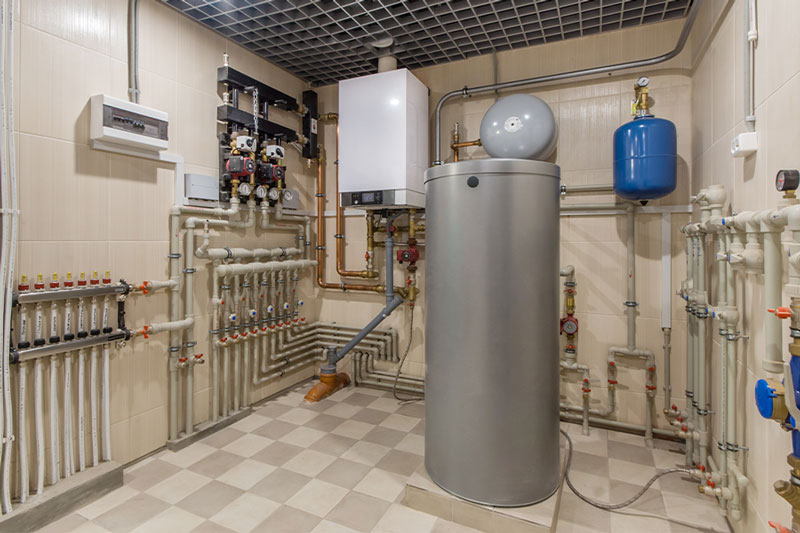
Expansion tank compliance is one area where new installations often run into trouble. County inspectors check that tanks are properly sized and installed to handle thermal expansion in the system. We get these details right the first time so your inspection stays on schedule.
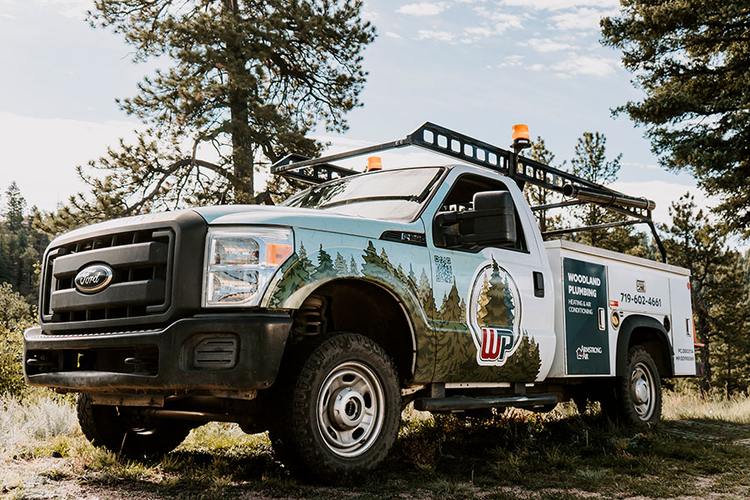
Why Builders and Homeowners Choose Woodland Plumbing, Heating & Air Conditioning
Builders and homeowners across the area trust our team for new-construction boiler heating.
- 20+ years in Teller County
- Boiler and radiant specialists
- Fair, transparent pricing
- Options, not pressure
- Licensed and insured
- BBB accredited
- Best of Teller County winner
- 4.8 stars from 100+ reviews
Frequently Asked Questions
When should a boiler contractor get involved in a new build?
During the planning stage. Radiant tubing and piping need to be laid out before concrete is poured, and framing is finished.
Is radiant floor heating a good fit for mountain homes?
Yes. It provides even, quiet heat and keeps warmth at floor level, which helps in homes with high or vaulted ceilings.
Does altitude affect boiler sizing?
Yes. Boilers lose output at high elevation, and we factor that loss into every equipment selection.
Can a boiler also heat my domestic water?
Yes. A combination boiler or an indirect water heater can supply both home heating and hot water.
Why do county inspectors check expansion tanks?
Expansion tanks absorb pressure as water heats. Inspectors confirm they are properly sized and installed to protect the system.